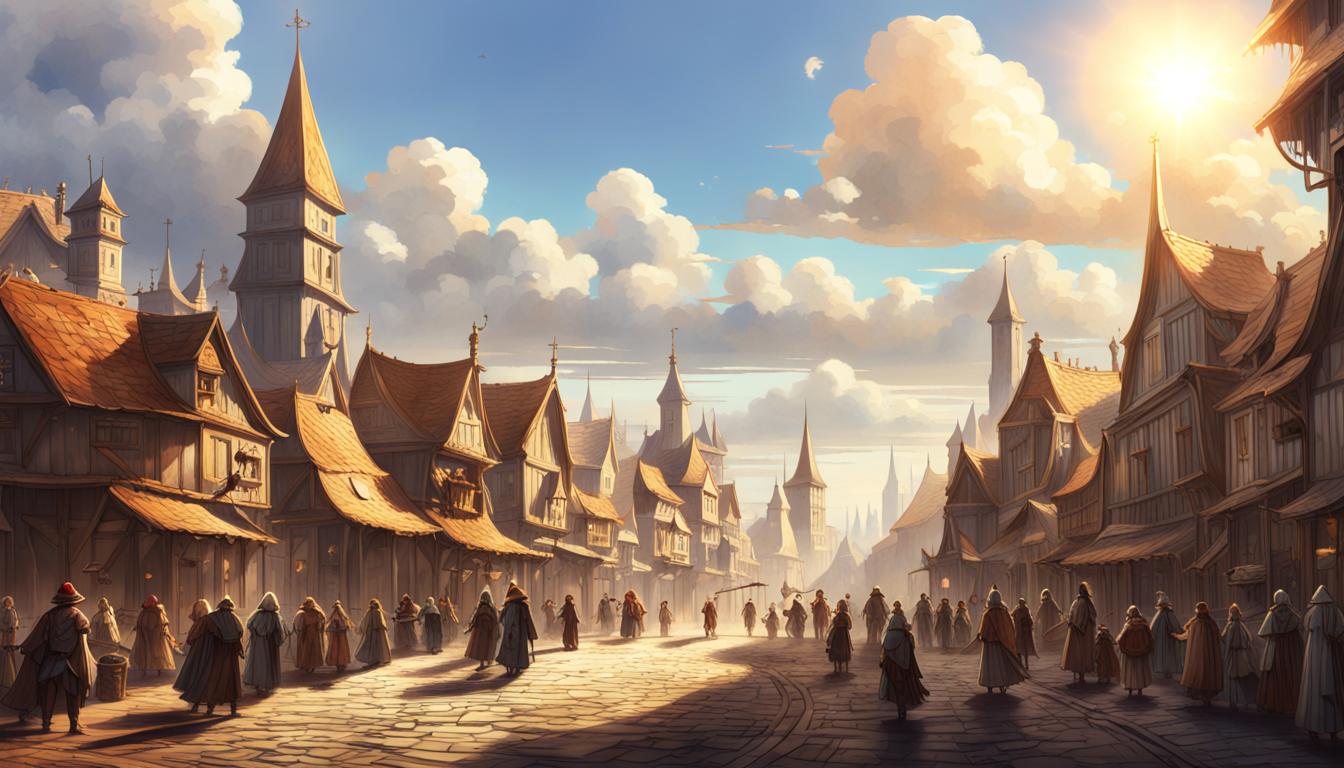
 Representation of the type of architecture found in the city, not an actual representation of the city itself. Credits
Athelney
Overview
The town of Athelney is the closest to the city of New Haven and is under the control of the New Haven Imperium. The town’s economy relies on two different factors: agriculture and slavery. Early on in the history of the Imperium, Athelney stood as a relatively autonomous town, paying only taxes to the Imperium for its protection. This was due to the town’s unusual practice of slavery, which at the time was done only to prisoners of war, or those that the Imperial family deemed to be “deplorable”. This practice did not spread to the rest of the Imperium until later on when Athelney showed the effectiveness of its slaves in building their town’s surrounding wall. The Imperium was so impressed that it was legalized and taxed within the Imperium, and all of its controlled territories. Slavery eventually expanded to capture “lesser” races, like kobolds and various goblinoids, depending on the region. Athelney maintained that it would be the central hub of this slave trade, as they have been able to withhold the secrets of their success. Due to this slave trade, most of the militaries of the Imperium’s controlled territories were replaced with soldier slaves, except the city of New Haven itself.
The town itself has been run by the ducal family of Blademoore for several generations, and with little resistance. Ever since the original Blademoore introduced the concept of slavery to the town, its economy has been good. While many of the common people do not openly practice slavery, they do not protest it either. This has caused tensions over years, and many attempted rebellions, with none successful. In recent years, it seems that most of the slaves in the Imperium are goblinoids or kobolds, except the occasional political prisoner or prisoner of war. In any of these cases, becoming a slave in the Imperium is one of the more undesirable fates, as one is never freed from slavery until their owner dies with no next of kin.
Districts
Hidden Mile
The Hidden Mile is the name for the northern most gate to the town. The only buildings here are barracks and guard stations.
North Road
The North Road district is the mercantile district, filled with various shops and craftsmen. The shops here are not exceptionally wealthy, though they are more so than other towns, relatively speaking.
- Social Class: Middle
- Population
- Approx: 725
- Human 70%
- Dwarf 10%
- Elf 10%
- Other 10%
- Subdivisions
- Marketplace
- Slave Quarter
- Shops
Gold Pass
One would be hard-pressed to not find a slave accompanying someone in this rather wealthy district. The gap in wealth between the residents of this district and the rest is extremely evident. The residents of this district are the more wealthy of merchants, as well as politicians and their families. Most of the wealth is gained through the sale of slaves and through war profiteering, as the stronger of the slaves are sent off to war to fight, and usually die.
- Social Class: Upper
- Population
- Approx: 525
- Human 99%
- Other 1%
- Subdivisions
- Wealthy Residential
- Civic District
- Fine Shops
Citadel
The religious center of the city, and the house of the local lord. The church in the Citadel hosts idols to all of the Living Gods, though it also includes the obligatory idol to Zastus as well. While the town outwardly denies relations to the Cult of Zastus, it is known that some of the nobles in the town are descendants of members of this long dead cult. The Citadel district covers the Citadel itself and the section of buildings directly behind it on the map.
- Social Class: Upper
- Population
- Approx: 200
- Human 99%
- Other 1%
- Subdivisions
- Lord's Keep
- Temple District
Haypoint
This is the largest district in the town, as it is the town's largest residential district and is home to most of the town's commoners. Given that the town's population is so dense, most of the homes in this district are rooms in larger buildings, with communal facilities, in a similar fashion to modern dorms. Most of these buildings are situated on top of shops, and are owned by the various nobles of the town.
- Social Class: Middle
- Population
- Approx: 1375
- Human 70%
- Dwarf 10%
- Elf 10%
- Other 10%
- Subdivisions
- Inn district
- Tenement District
- Adventurer's Quarter
- Shops
- Red Light District
- Warehouse District
South Gate
The South Gate is the impromptu agricultural district of the town, as the farms are situated just outside the gate. With the exception of a couple guard stations, most of the buildings here are shops and vendors dedicated to the slave trade and the equipment used by the local farmers.
- Social Class: Lower
- Population
- Approx: 500
- Human 80%
- Other 20%
- Subdivisions
- Caravan District
- Tannery District
- Marketplace
- Shops
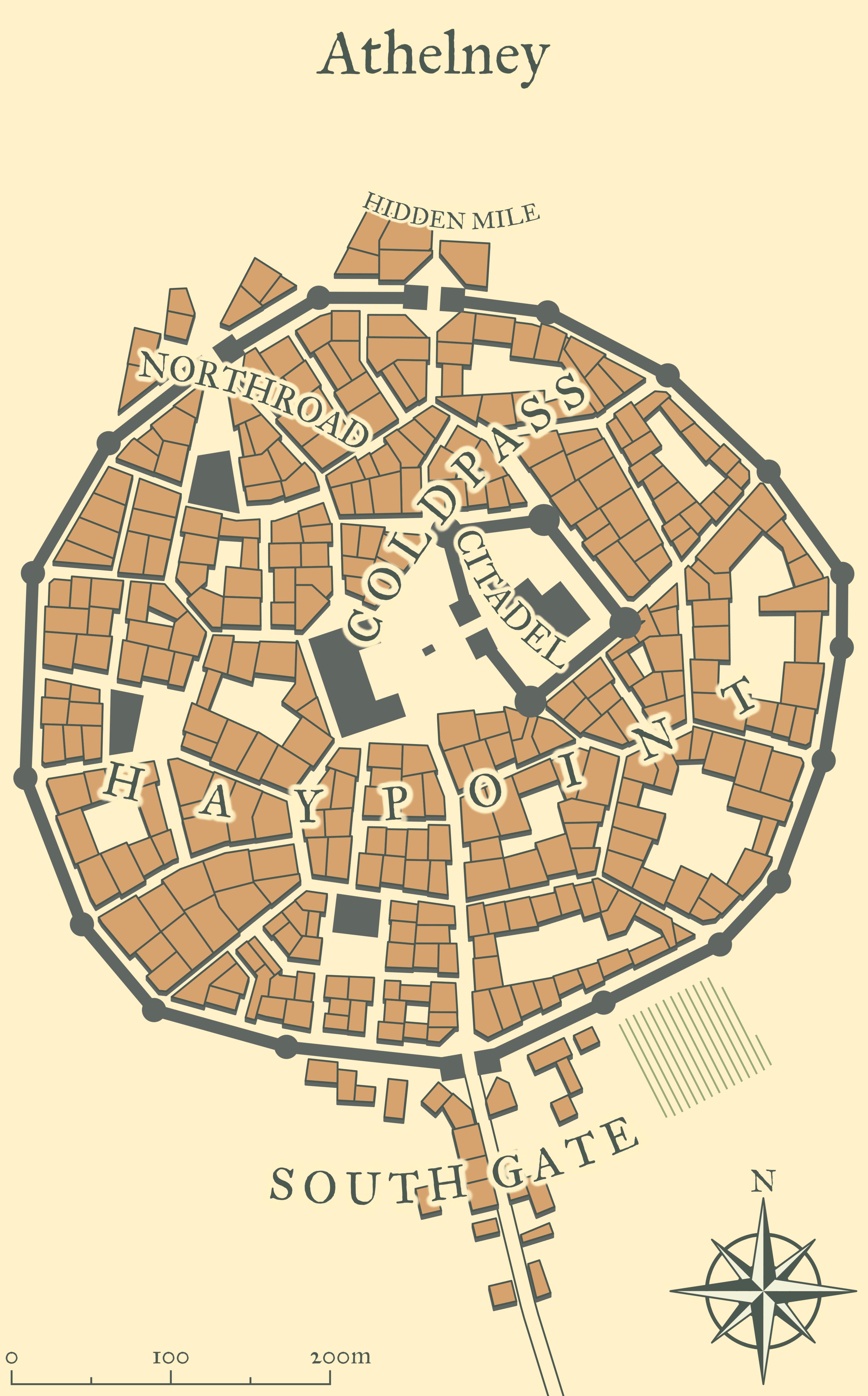 Map of the city.
As a note from the author, the setting is currently under revision to accommodate the inclusion of the Spelljammer setting.
Antæra is unofficial Fan Content permitted under the Fan Content Policy. Not approved/endorsed by Wizards. Portions of the materials used are property of Wizards of the Coast. ©Wizards of the Coast LLC. For more information on the Fan Content Policy, visit the link here.